
Your Body Is Not a Debate
If you've been around Highland Healing Arts for very long, you've probably heard me say that yoga teaches us to listen.
Not to social media. Not to the loudest voice in the room. Not even to me.
It teaches us to listen to ourselves.
That philosophy extends far beyond the yoga mat. It influences how I eat, how I move, how I manage stress, and how I make decisions about my health.
The truth is, every one of us is different.
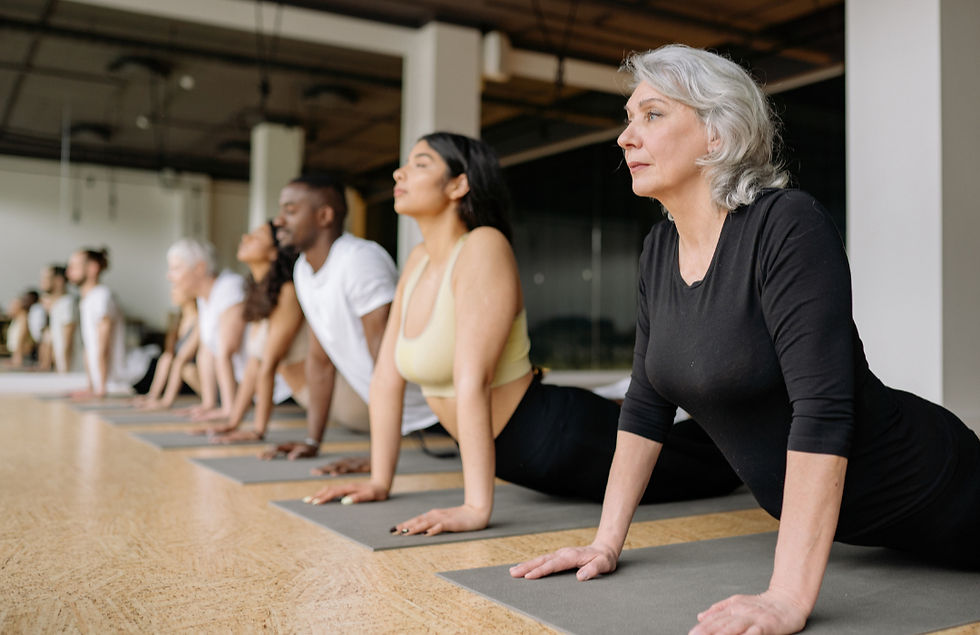
Our genetics are different. Our family histories are different. Our medical conditions are different. Our cultures, religions, ethics, lifestyles, and personal values are different. It only makes sense that what helps one person thrive may leave another feeling miserable.
I've spent most of my life learning that lesson.
For as long as I can remember, I dealt with fatigue, headaches, muscle weakness, brain fog, and a long list of other symptoms. I honestly thought everyone felt that way. About a year after my son was born, everything changed. I became incredibly sick. I was having unexplained reactions after eating, and no one could tell me why.
An allergist diagnosed a tomato allergy, so I removed tomatoes from my diet. It helped—but not enough. Eventually I found a functional medicine physician and another allergist who dug much deeper. Together they uncovered multiple food allergies, sensitivities, and underlying health issues.
That was more than twenty years ago.
Since then I've experimented with countless dietary approaches, elimination protocols, supplements, herbs, and lifestyle changes. Every change taught me something.
Some foods improved my sleep.
Some reduced inflammation.
Some increased my energy.
Some caused joint pain.
Some triggered headaches.
Some left me exhausted for days.
Over time, I became my own research project. Not because I wanted to—but because I had to.
Every now and then, though, I find myself wondering if maybe everyone else has figured something out that I haven't.
It's hard not to when you're constantly surrounded by confident opinions. One podcast says everyone needs more fiber. Another insists plants are the problem. One expert says meat is unhealthy. Another says it's essential.
Social media is even louder.
Sometimes the opinions aren't simply different—they're judgmental.
Statements like:
"I'm not judging anyone's choices. I just choose not to eat other beautiful, living souls."
Or:
"You just haven't done it right before."
Those comments assume something important—that everyone has the same body.
We don't.
Recently, after listening to several health podcasts discussing the benefits of fiber, phytonutrients, and vegetables, I decided to experiment.
On paper, it made sense.
I added oats, one of the few grains I've historically tolerated and proven to help with digestion and blood pressure.
I added beets because they're praised for supporting nitric oxide production and cardiovascular health.
I added chickpeas and black beans for fiber and plant protein.
I added tart cherry juice for its anti-inflammatory properties.

For context, my normal diet already includes plenty of foods I know my body tolerates well: quality animal protein, leafy greens, cabbage and other brassicas, low oxalate and low lectin vegetables, herbs, fruit, and small amounts of dairy.
I wasn't replacing nutritious foods. I was simply adding more foods that are widely considered "healthy."
Within days, my body gave me an unmistakable answer.
Joint pain.
Swelling.
Gout.
Extreme fatigue.
About five pounds of inflammation-related weight gain.
The experiment didn't produce the outcome I had hoped for. Instead, it reminded me of something I already knew.
No podcast knows my body.
No influencer knows my body.
No stranger on the internet knows my body.
Even well-designed scientific research describes what tends to work for groups of people. It cannot tell me exactly what my individual body will tolerate. Only my own experience can do that. That doesn't mean science is wrong.
It means science and self-awareness belong together.
This experience also reminded me that we rarely know the full story behind someone else's plate. Some people avoid foods because of severe allergies. Others live with autoimmune diseases, digestive disorders, ARFID (Avoidant/Restrictive Food Intake Disorder), sensory sensitivities, or medical conditions that limit what they can safely or comfortably eat. Others make food choices based on their culture, religion, ethics, finances, or simply what is available to them. What looks like a "bad choice" from the outside may actually be the healthiest, safest, or most compassionate choice for that individual.
One of the greatest gifts yoga has given me is the practice of observation.
Notice.
Be curious.
Pay attention.
Respond instead of react.
That same practice has guided my health journey for decades.
I spend my life in two worlds that people often assume cannot coexist. Half of my life is devoted to yoga, where Ahimsa—translated as non-harming—is one of our guiding principles. The other half is devoted to raising Scottish Highland cattle using ethical, regenerative, and sustainable practices.
For me, those worlds are not in conflict. Ahimsa isn't simply about avoiding harm. It's about reducing suffering wherever we can. That means treating animals with respect throughout their lives. It means caring for the land. It means supporting regenerative agriculture. And it also means not harming myself by forcing my body to eat foods that consistently make me sick simply because someone else believes I should.
Each of us has to define what living ethically looks like through the lens of our own values, our own health, and our own circumstances.
My goal isn't to convince anyone to eat the way I do.
If you thrive on a vegan diet, I'm genuinely happy you've found what works for you.
If you feel amazing following a Mediterranean diet, that's wonderful.
Carnovire has helped you? Fantastic!
If another approach helps you live your healthiest life, I support that too.
What I hope we can leave behind is the idea that there is only one right answer for everyone.
Perhaps the greatest act of compassion isn't convincing someone to eat the way we do—it's recognizing that their body, their circumstances, and their journey are different from our own.
Health is rarely simple.
So instead of asking, "What's the best diet?"
Maybe we should ask: "What helps my body feel its best?"
Because no expert, influencer, podcast host, or social media post can answer that question for you.
Your body can.
The challenge is learning to listen.


Comments